
Modules
GGSA has over 300 modules that principals, instruction coaches, teachers, and teaching assistants can access. They are based on a wide range of subjects encompassed within effective teaching techniques and practices, positive high expectations behaviour, schools cycles of practice, and school improvement. They are clustered into five types of modules being: prerequisite modules, core modules, teaching program modules, practice modules, and mini modules.
Pre-requisite Modules
Pre-requisites are introduction modules that cover each of the course themes of effective teaching, positive high expectations, cycles of school practice and school improvement modules. All school roles complete these so that they develop a strong grounded understanding of these subjects.

Closed Place Holder
Pre-requisite Modules and Information
 |
Learn Effective Teaching Essentials (LETE)A professional learning module for principals, instruction coaches, teachers and teaching assistants. Participants develop an understanding of the principles of effective teaching and how they contribute to student achievement and school improvement. They can implement evidence-based teaching practices, use strategies to engage students and work collaboratively with families to support student success. |
 |
Learn Cycles of School Practice (LCSP)A professional learning module for principals, instruction coaches, teachers and teaching assistants. Participants understand the structure of the eight Cycles of School Practice and how the cycles support effective teaching and school improvement. They can participate in school-wide professional learning, coaching and data reviews, and how collaboration, parent engagement and community partnerships contribute to continuous improvement across the school. |
 |
Build Positive High-Expectations School CommunitiesA professional learning module for principals, instruction coaches, teachers and teaching assistants. Participants understand the values, behaviours and expectations that underpin a positive high-expectations school culture. They can use data-informed decision-making, build consistent behavioural expectations and work in partnership with parents, families and communities to support student learning and school improvement. |
 |
Learn School Improvement (Coming soon) |
Core Modules
Core Modules cover the course themes of effective teaching, positive high expectations, cycles of school practice and school improvement modules. All school roles complete some of these modules in whatever course they undertake.
Closed Place Holder
Foundation
 |
Deliver Effective Teaching Techniques (DETT)A professional learning module for teachers and teaching assistants. Participants develop foundational knowledge and skills to understand and master practices that support effective teaching. They learn how to prepare the learning environment, promote positive behaviours, engage students through direct instruction, check for understanding, correct errors, provide feedback, facilitate independent practice, and assess for mastery. The module equips teaching teams with techniques for delivering structured, explicit instruction that improve student engagement and learning outcomes. |
 |
Deliver Effective Teaching Techniques Coaching (DETTC)A professional learning module for instruction coaches. Participants understand the components of effective teaching and the coaching practices that support consistent implementation across classrooms. They learn how to model effective teaching techniques, facilitate professional learning, observe classroom practice and provide targeted feedback to teachers. They can use coaching conversations, classroom observations and data-informed support strategies to strengthen teaching practice and improve student learning outcomes. |
 |
Deliver Cycles of School Practice Leadership (DCSPL)A professional learning module for school leaders responsible for guiding school-wide improvement. Participants understand the eight Cycles of School Practice and the leadership role required to implement them across the school. They can lead professional learning, coordinate coaching, analyse school data and strengthen collaboration with staff, parents and the wider community to support continuous school improvement. |
 |
Deliver Cycles of School Practice Coaching (DCSPC)A professional learning module for instruction coaches. Participants will understand how the 8 Cycles of School Practice supports effective teaching. They will learn how to lead the school team in their professional learning plans and how to conduct classroom coaching in support of these plans. They can hold school and classroom data reviews to support school improvement efforts and the processes for facilitating conversations and collaborating with the teaching team. |
|
Deliver Cycles of School Practice in the Classroom (DCSPIC)A professional learning module for teachers and teaching assistants. Participants understand how the 8 Cycles of School Practice support effective teaching and continuous classroom improvement. They learn how professional learning, coaching and collaboration strengthen teaching practice, and how assessment and mastery data can inform instruction. Participants can develop strategies for communicating student progress and engaging families in learning. |
 |
Deliver Continuous Improvement Leadership (DCIL)A professional learning module for school leaders focused on strengthening student outcomes through continuous improvement. Participants understand the principles of the Continuous Improvement Framework and the leadership role required to implement it effectively. They can use tools such as the Continuous Improvement Tracker to review teaching practices, analyse data and guide school improvement processes while engaging staff, parents and the wider community. |
 |
Deliver Continuous Improvement Coaching (DCIC)A professional learning module for instruction coaches focused on strengthening teaching practice and school improvement. Participants understand the principles of the Continuous Improvement Framework and the coaching role within the improvement process. They can use tools to analyse teaching practices, support teachers through coaching and guide collaborative data reviews that improve student learning outcomes. |
 |
Deliver Continuous Improvement in the Classroom (DCIIC)A professional learning module for teachers and teaching assistants focused on improving teaching practice and student outcomes. Participants understand how assessment, data and classroom practices contribute to continuous improvement. They can interpret assessment results, refine instructional strategies and collaborate with colleagues to strengthen teaching. Participants also develop strategies for communicating student progress and partnering with parents to support learning. |
Proficient
 |
Embed Effective Teaching Coaching (EETC)A professional learning module for instruction coaches who support teachers in strengthening classroom practice. Building on Learn Effective Teaching Essentials, participants deepen their understanding of effective teaching techniques and coaching strategies. They can guide teachers in refining instructional practices, improving student engagement and strengthening teaching consistency across classrooms to support improved student learning outcomes. |
 |
Embed Effective Teaching Techniques (EETIC)A professional learning module for teachers who have completed Learn Effective Teaching Essentials. Participants deepen their understanding of effective teaching techniques and how they can be consistently applied in the classroom. They can refine instructional strategies, strengthen student engagement and adapt teaching approaches to meet diverse learning needs while embedding effective teaching practices into everyday classroom routines. |
 |
Embed Cycles of School Practice (ECSP)A professional learning module for school leaders, instruction coaches and teaching teams focused on embedding continuous improvement across the school. Participants deepen their understanding of the Cycles of School Practice framework and how each cycle supports collaboration, data-informed decision-making and reflective practice. They can use coaching, professional learning and data reviews to strengthen teaching practice and sustain ongoing school improvement. |
 |
Embed Continuous Improvement Leadership (ECIL)A professional learning module for school leaders who are strengthening continuous improvement processes within their schools. Participants deepen their understanding of the Continuous Improvement Framework and how leadership decisions influence teaching quality and student outcomes. They can analyse assessment data, guide professional learning and support staff collaboration while building strong partnerships with families to support ongoing school improvement. |
 |
Embed Continuous Improvement Coaching (ECIC)A professional learning module for instruction coaches focused on embedding continuous improvement practices across teaching teams. Participants deepen their understanding of the coaching frameworks used within the Continuous Improvement Framework. They can apply coaching techniques, including the Three R’s approach, to support teachers and school leaders in refining instructional practices and strengthening school improvement processes. |
|
Embed Continuous Improvement in the Classroom (ECIIC) (Coming soon) |
Accomplished
 |
Influence Effective Teaching for Student Success (IETSS)A professional learning module for Accomplished practitioners, including principals, instruction coaches and expert teachers. Participants develop the knowledge and skills to demonstrate and model effective teaching techniques and practices that influence school-wide improvement. They learn how to model foundational classroom techniques, lead coaching and peer collaboration, engage parents and the community, and foster a culture of continuous professional learning. They can support fidelity of implementation, use data to inform decision-making, and build a shared commitment to student success across the school. |
|
Influence Cycles of School Practice in the Classroom (ICSPC) (Coming soon) |
Lead
|
Lead School Improvement (LSI) (Coming soon)
|
Elective Modules
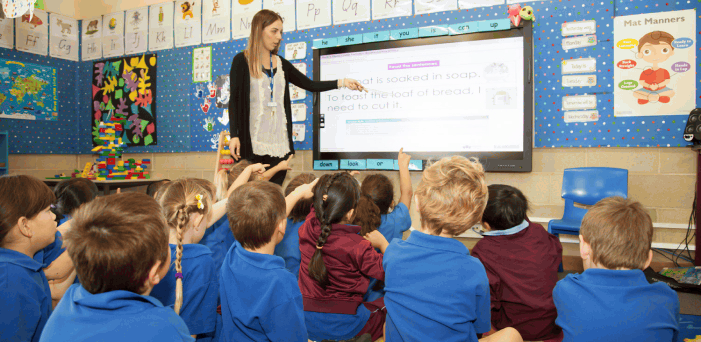
Elective Modules cover the teaching of curriculum programs that teachers and teaching assistants complete. Teaching team members chose the modules to match the programs and year levels they are delivering in their classroom.
Closed Place Holder
English – Direct Instruction
 |
Teach Reading Mastery Signature Edition K, Year 1, Years 2–3, Years 4–5 (TRMSE)A professional learning module for teachers and teaching assistants. Participants develop an understanding of how the program builds reading accuracy, fluency, comprehension and vocabulary through the Direct Instruction approach. They can deliver scripted lessons, apply correction procedures, guide students through reading and comprehension activities, and use mastery testing to monitor student progress. |
 |
Teach Reading Mastery Transformations Years 4–5 (TRMT)A professional learning module for teachers and teaching assistants. Participants understand how the Reading Mastery Transformations program strengthens reading comprehension and fluency for upper primary students. They can deliver lessons accurately, apply correction procedures and guide students through structured reading and workbook activities. |
 |
Teach Corrective Reading Decoding A–B1 (TCRD)A professional learning module for teachers and teaching assistants. Participants understand the rationale for the Corrective Reading Decoding program and how it develops foundational decoding and phonics skills for students who require additional reading support. They can present lessons, model correct sound pronunciation and apply correction procedures. Participants also learn how to conduct workbook activities, mastery tests and record assessment data to monitor progress.
|
 |
Teach Corrective Reading Decoding B2–C (TCRD)A professional learning module for teachers and teaching assistants. Participants understand how the program supports students in strengthening decoding accuracy and reading fluency. They can deliver lessons, apply correction procedures and guide students through reading and workbook exercises. Participants also develop skills in conducting mastery tests, recording assessment data and motivating students to engage consistently with the program.
|
 |
Teach Corrective Reading Comprehension A–B1 (TCRC)A professional learning module for teachers and teaching assistants. Participants will understand the rationale for using CRC A/B1 and the various techniques to engage students. They can use the accompanying correction procedures, how to conduct workbook exercises and work checks, how to conduct mastery tests, how to record assessment data and how to motivate students.
|
 |
Teach Corrective Reading Comprehension B2–C (TCRC)A professional learning module for teachers and teaching assistants. Participants will understand the rationale for using CRC B2/C and the various techniques to engage students. They can use the accompanying correction procedures, how to conduct workbook exercises and work checks, how to conduct mastery tests, how to record assessment data and how to motivate students.
|
 |
Teach Language for Learning (TLFL)A professional learning module for teachers and teaching assistants working with early learners. Participants understand how the program develops foundational oral language skills that support both spoken and written communication. They can deliver structured language lessons that build vocabulary, sentence construction and comprehension. Participants also develop strategies to guide student responses, support language development and monitor student progress through structured practice.
|
 |
Teach Reading Mastery Signature Edition Language Arts K (TRMSE:LANG)A professional learning module for teachers and teaching assistants. Participants understand how the program builds foundational language skills through structured Direct Instruction lessons. They can deliver lessons accurately, guide students through vocabulary and language development activities, and apply correction procedures and mastery tests. Participants also develop strategies for monitoring student progress and motivating students through structured practice.
|
 |
Teach Reading Mastery Signature Edition Language Arts Years 1–2 (TRMSE:LANG)A professional learning module for teachers and teaching assistants. Participants understand how the program develops vocabulary, comprehension and language structures that support reading success. They can present lessons, guide structured language activities and apply correction procedures. Participants also develop skills in conducting mastery tests, recording assessment data and monitoring independent student work.
|
 |
Teach Reading Mastery Signature Edition Language Arts Years 3–5 (TRMSE:LANG)A professional learning module for teachers and teaching assistants. Participants understand how the program strengthens language comprehension, vocabulary and reasoning skills that support reading development. They can deliver lessons, guide structured language exercises and apply correction procedures. Participants also develop skills in conducting mastery tests, recording assessment data and monitoring student progress.
|
 |
Teach Spelling Mastery A–F (TSM)A professional learning module for teachers and teaching assistants. Participants understand how the program develops spelling, word analysis and written language skills using the Direct Instruction approach. They can deliver lessons accurately, guide spelling practice activities and apply correction procedures. Participants also develop skills in conducting mastery tests, recording assessment data and using data to inform teaching and student support.
|
 |
Teach Expressive Writing (TEW)A professional learning module for teachers and teaching assistants. Participants understand how the program develops structured writing skills through explicit instruction and guided practice. They can deliver lessons that support sentence construction, paragraph development and written expression. Participants also develop skills in conducting mastery tests, recording assessment data and guiding students as they build confidence and accuracy in writing.
|
 |
Teach English: WritingA professional learning module designed for educators seeking to develop students’ writing skills and foster a love for writing through structured lessons, explicit instruction and integration across the curriculum. This module explores how the Oz-e-English Writing program enhances students’ understanding of language, literature and literacy while aligning with the Australian Curriculum for Years Foundation to 6.
|
|
Teach Reading Mastery Language Arts Transformations Years 4–5 (TRMT:LANG)A professional learning module for teachers and teaching assistants. Participants will understand the core components of Teach Reading Mastery Transformations 4–5 LA and apply the techniques needed for teaching this program. They can conduct mastery tests and record assessment data. Teach Essentials for Writing (TEFW) (Coming soon) |
English – GGSA Direct and Explicit Instruction
 |
Teach English Writing F–6 (TOEEW)A professional learning module for teachers and teaching assistants. Participants understand the structure of the English writing program and how explicit instruction supports the development of grammar, vocabulary and written expression. They can guide students through sentence construction, paragraph writing and extended-text tasks. Participants also develop strategies to integrate content from key learning areas (such as History and Geography) and support students in applying writing skills across the curriculum. |
Math
 |
Teach Connecting Math Concepts A–F (TCMC, Years F–6)A professional learning module for teachers and teaching assistants. Participants understand how the program develops mathematical reasoning and problem-solving skills through the Direct Instruction approach. They can deliver lessons accurately, guide students through structured mathematics exercises and apply correction procedures. Participants also develop skills in conducting mastery tests, recording assessment data and supporting students through targeted practice and remediation. |
 |
Teach Corrective Mathematics (TCM)A professional learning module for teachers and teaching assistants. Participants understand how the program supports students who require additional instruction in foundational mathematics concepts. They can deliver lessons accurately, guide structured mathematics activities and apply correction procedures. |
 |
Teach DISTAR KA professional learning module for teachers and teaching assistants. In this module, participants will understand the rationale for using DISTAR Arithmetic K and learn about the materials, placement testing, grouping and use of positive praise. They will also understand the progression of the learning tracks of DISTAR Arithmetic K, the potential problems, and learn how to correct specific mistakes. |
|
Teach Essential Algebra 6+ (TEFA) (Comimg soon) |
Science
 |
Teach Oz-e-science Year F–6 (TOES)A professional learning module for teachers and teaching assistants. Participants understand the structure of the Oz-e-Science curriculum and how explicit instruction supports the development of scientific knowledge and inquiry skills. They can guide students through scientific concepts, experiments and structured investigations using the scientific method. Participants also develop strategies for facilitating research activities, simulations and classroom discussions that strengthen students’ understanding of science. |
Health and Physical Education / Every Child Is Special
|
Learn How to Build Positive High-Expectations School Communities (LHBPHESC)A professional learning module for principals, instruction coaches, teachers and teaching assistants. Participants understand the generic values and behaviours that are consistent with positive high expectations models. They use the various decision-making procedures based on data and discuss how to work in partnership with parents, families and communities. |
 |
Teach Character Development (TCD)A professional learning module for teachers and teaching assistants. Participants understand the structure and purpose of the Character Development program and how it supports the development of positive values and behaviours in students. They can deliver lessons using Teacher Talk, workbooks and assessments, and how to guide students in developing key character competencies. Participants also explore strategies for supporting school-wide activities that strengthen character development across the school. |
 |
Teach Social-Emotional Learning (TSEL)A professional learning module for teachers and teaching assistants. Participants understand how the Social-Emotional Learning program supports the development of self-awareness, emotional regulation, social awareness and social skills. They can deliver structured lessons and activities that strengthen students’ emotional and interpersonal development. Participants also explore strategies for supporting school-wide initiatives and building positive relationships that contribute to student wellbeing and engagement. |
 |
Deliver Positive High-Expectations Leadership (DPHEL)A professional learning module for school leaders responsible for guiding a positive high-expectations culture across the school. Participants understand the leadership practices that support consistent behaviour expectations and student success. They can lead the teaching of values and expectations, guide behaviour data reviews and work collaboratively with staff and families to strengthen student engagement, behaviour and learning outcomes. |
 |
Deliver Positive High-Expectations Coaching (DPHEC)A professional learning module for school coaches. Participants understand the coaching role in supporting the implementation of positive high-expectations practices across the school. They can guide teachers in applying behaviour management strategies, support the Behaviour Management Team and facilitate professional conversations that strengthen classroom practice. Participants also develop strategies for working collaboratively with staff, parents and the wider community to improve student engagement and behaviour. |
 |
Deliver Positive High-Expectations Classroom Practices (DPHECP)A professional learning module for teachers and teaching assistants. Participants understand the classroom practices that contribute to a positive high-expectations school culture. They can establish clear rules and routines, use positive reinforcement and implement engagement strategies that support productive learning environments. Participants also develop strategies for preventing and responding to inappropriate behaviour while building a classroom climate that promotes student responsibility and success. |
 |
Support Families in Positive High-Expectations Schools (SFPHES)A professional learning module for principals, instruction coaches, teachers and teaching assistants. Participants learn the components of positive high-expectations zones and understand how these environments are characterised by a belief in the potential of every student. They can partner with parents and families and how to teach students the values, expectations, behaviours and character traits that support improved learning and positive behaviour. |
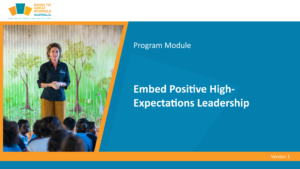 |
Embed Positive High-Expectations Leadership (EPHEL)A professional learning module for school leaders focused on strengthening and sustaining a positive high-expectations culture. Participants deepen their understanding of the Behaviour Management Model and the leadership structures that support its implementation. They can monitor behaviour data, guide tiered interventions and support the work of the Behaviour Management Team. Participants also develop strategies for strengthening partnerships between school and home to support student wellbeing and behaviour. |
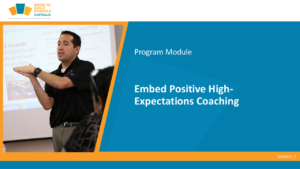 |
Embed Positive High-Expectations Coaching (EPHEC)A professional learning module for school coaches focused on strengthening and sustaining behaviour practices across the school. Participants deepen their understanding of coaching strategies that build staff capability and strengthen school-wide behaviour systems. They can support behaviour data reviews, guide professional learning and strengthen Tier 2 and Tier 3 interventions. Participants also explore strategies for building staff engagement and strengthening partnerships with the wider school community. |
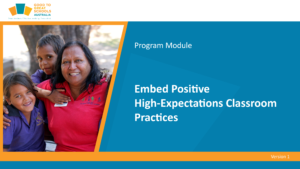 |
Embed Positive High-Expectations Classroom Practices (EPHECP)A professional learning module for teachers and teaching assistants. Participants deepen their understanding of classroom practices that sustain a positive learning culture. They can refine routines and rituals, strengthen positive language practices and apply reflective strategies to improve classroom management. Participants also explore strategies for supporting students with higher behavioural needs while maintaining a consistent and positive classroom environment. |
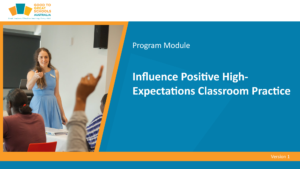 |
Influence Positive High-Expectations Classroom Practices (IPHECP)A professional learning module for teachers who are strengthening their influence on behaviour practices across the school. Participants understand how classroom practices contribute to a consistent positive high-expectations culture. They can model effective behaviour strategies, support colleagues and contribute to school-wide initiatives that strengthen behaviour management systems. Participants also develop strategies for building strong relationships with students, staff and families. |
 |
Lead Positive High-Expectations Classroom Practices (LPHECP)A professional learning module for experienced teachers who are leading behaviour practices across their school. Participants deepen their understanding of positive high-expectations frameworks and the leadership role teachers play in sustaining them. They can model exemplary classroom practices, mentor colleagues and support school-wide behaviour initiatives. Participants also develop strategies for strengthening staff capability and embedding consistent behaviour expectations across the school. |
 |
Set Up Classrooms for Positive Behaviour (SUCPB)A professional learning module for educators focused on creating classroom environments that support positive behaviour and engagement. Participants understand how classroom design and routines influence student behaviour and learning. They can organise classroom spaces, establish procedures and create systems that promote independence and responsibility. Participants also explore strategies for preventing behaviour challenges by designing learning environments that support positive expectations. |
 |
Teach Rules and RoutinesA professional learning module for principals, instruction coaches, teachers and teaching assistants focused on establishing clear and predictable learning environments. Participants understand how explicitly teaching rules and routines supports positive behaviour and effective classroom management. They can break expectations into observable behaviours, teach routines using structured instruction and reinforce them consistently. Participants also develop strategies to model expectations, practise routines with students and maintain learning environments where students understand and follow classroom procedures. |
 |
Participate on the BMTA professional learning module for all role holders within schools. Participants learn to participate effectively on the Behaviour Management Team (BMT). They unpack team roles and data-based decision making. Beginning with the changing needs of students, participants explore how BMTs guide whole school behaviour systems. The module guides them through structured teamwork that strengthens clarity and follow through. Participants master analysing behaviour data, planning targeted interventions and communicating decisions with consistency. |
 |
Address Minor Inappropriate Behaviour (AMIB:MINOR)A professional learning module for principals, instruction coaches, teachers and teaching assistants focused on responding to everyday behaviour challenges in a consistent and constructive manner. Participants develop an understanding of behaviour triggers, corrective responses, logical consequences, restorative practices and the processes for documenting and communicating behaviour concerns. They can respond systematically to minor inappropriate behaviour, apply appropriate corrective strategies, communicate effectively with parents, and support a whole-school culture of positive behaviour and high expectations. |
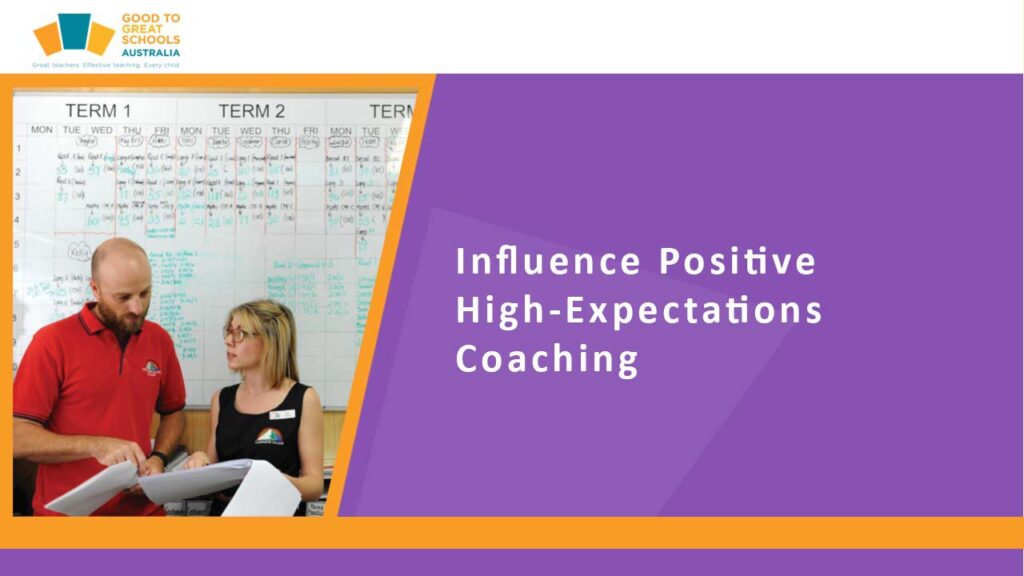 |
Influence Positive High-Expectations Coaching (IPHEC)Influence Positive High-Expectations Coaching is a professional learning module for Instruction Coaches. Upon completion of this module, participants will be able to coach teachers and teaching assistants to consistently implement Positive High-Expectations (PHE) practices across classrooms and school environments. Participants will learn how to support the implementation of routines and behaviour systems, coach preventative and responsive behaviour management strategies, facilitate professional conversations, use data to drive continuous improvement, and support principals in embedding a whole-school culture of high expectations. The module also develops the coach’s capacity to lead professional development, monitor fidelity of implementation, and strengthen partnerships between school and home to improve student behaviour, engagement and wellbeing. |
|
Learn School Improvement (Coming soon)
|
Special Needs Support
 |
Deliver Executive Function Development Activities (DEFDA)A professional learning module for educators focused on strengthening students’ executive functioning skills. Participants understand how skills such as working memory, cognitive flexibility and self-regulation influence learning and behaviour. They can deliver structured activities and targeted conversations that develop executive function skills. Participants also explore strategies for identifying student needs and supporting students to organise tasks, regulate emotions and manage learning effectively. |
 |
Deliver Special Needs Support with Direct InstructionA professional learning module for educators and teaching assistants supporting students with additional learning needs. Participants understand the Special Needs Support Program framework and the role of direct instruction in inclusive classrooms. They can apply individualised planning, reasonable adjustments and structured teaching strategies. Participants also explore case management approaches, data-driven decision-making and collaborative practices that support students with disabilities. |
 |
Deliver Special Needs Support Classroom Practices (DSNSCP)A professional learning module for teachers and teaching assistants supporting students with additional learning needs. Participants understand how to implement classroom practices that support the Special Needs Support Program. They can interpret assessment data, develop Individualised Plans and apply targeted instructional strategies. Participants also explore classroom adjustments that support student participation while maintaining alignment with curriculum expectations. |
 |
Deliver Special Needs Support Coaching (DSNSC)A professional learning module for instructional and community coaches supporting inclusive education practices across a school. Participants understand the coaching role in strengthening the implementation of the Special Needs Support Program. They can guide teachers in applying inclusive practices, support collaborative problem-solving and facilitate professional conversations that improve teaching strategies for students with additional learning needs. |
 |
Deliver Special Needs Support Leadership (DSNSL)A professional learning module for principals leading inclusive education practices across their school. Participants understand the leadership structures required to embed the Special Needs Support Program into school improvement planning. They can coordinate school teams, guide inclusive practices and ensure consistent support for students with additional learning needs through data-informed decision-making and collaborative planning. |
 |
Deliver Life Mastery Class (DLMC)A professional learning module for teachers and teaching assistants delivering Life Mastery as a targeted intervention program. Participants understand how Life Mastery supports students with behavioural or additional learning needs through the development of executive function skills. They can deliver structured lessons aligned with the nine executive function domains of the BRIEF-2 framework and guide students through activities that support emotional regulation and personal development. |
 |
Embed Supporting Students with Low Executive Function (ESSLEF)A professional learning module for principals, instruction coaches, teachers and teaching assistants. Participants deepen their understanding of executive function and its impact on learning, behaviour and emotional regulation. They can integrate executive function strategies into classroom routines and behaviour support practices. Participants also develop strategies for monitoring progress, strengthening collaboration and embedding executive function development into school planning. |
 |
Identify Students’ Executive Function Challenges and Deliver Appropriate Intervention (ISEFCDAI)A professional learning module for principals, instruction coaches, teachers and teaching assistants. Participants develop an understanding of executive function, its impact on learning and behaviour, and how executive function challenges present in classroom settings. They can identify executive function-related behaviours, determine affected executive function areas, and align appropriate interventions and supports to individual student needs. |
 |
Learn to De-escalate Students (LDS)A professional learning module for principals, instruction coaches, teachers and teaching assistants focused on understanding and responding to student escalation. Participants develop an understanding of behaviour as communication, the stages of escalation, common triggers and the role of Individualised Plans in behaviour support. They can identify patterns of escalation, apply preventative and de-escalation strategies, and use intentional communication to support safe and productive learning environments. |
|
Embed School Counselling Program (ESCP) (Coming soon)Embed Wellness and Growth Hub Intervention (EWGHI) (Coming soon) |
Community
|
Learn School Improvement (Coming soon)Lead Community High Fives (LCHF) (Coming soon)Coach Community High Fives (CCHF) (Coming soon)Teach Community High Fives (TCHF) (Coming soon)Support Community High Fives (SCHF) (Coming soon) |
Language
|
Teach the Guugu Yimithirr Language (Coming soon) |
Religion
 |
Teach Bible Literacy (TBIBLIT)A professional learning module for teachers and teaching assistants. Participants understand the purpose and structure of the Bible Literacy program and how it supports literacy learning through rich texts, explicit teaching and classroom-ready resources. They can deliver lessons with fidelity, guide student discussion and comprehension, and use program resources to strengthen reading, writing and vocabulary. Participants also explore how the program aligns with Australian curriculum expectations. |
The Arts – Music
 |
Teach Music for Learning Year F–6 (TMFL)A professional learning module for teachers and teaching assistants. Participants understand the structure and purpose of the Music for Learning program and how evidence-based music instruction supports student engagement and learning. They can deliver sequenced, classroom-ready lessons with fidelity, establish effective classroom routines and use program resources to build skills across the music curriculum. Participants also explore alignment to the Australian Curriculum: The Arts (Music). |
 |
Deliver E=mc² the Musical (DEM)A professional learning module for teachers and school leaders coordinating the E=MC² musical production. Participants understand how musical productions integrate music, performance and collaboration across the school community. They can organise rehearsals, guide students in performance preparation and manage the production process to deliver a successful school musical event. |
|
Deliver Annual School Performance (DASP)A professional learning module for teachers and school leaders responsible for coordinating school performances. Participants understand how whole-school performances support student engagement, creativity and community connection. They can plan, organise and deliver performances, coordinate rehearsals and support students in preparing for performance events that showcase their learning and talents. Deliver Instrumental Music and Choir (DIMC)A professional learning module for teachers and music educators leading instrumental programs and choirs. Participants understand how structured music programs support student musical development and engagement. They can organise rehearsals, guide students in developing instrumental and vocal skills, and coordinate performances that build confidence and collaboration. |
The Arts – Visual
 |
Teach Visual Arts (TVISARTS)A professional learning module for teachers and teaching assistants. Participants understand the rationale, structure and curriculum alignment of the Visual Arts program and the instructional framework that supports high-quality arts teaching. They can deliver lessons with fidelity, apply effective teaching techniques and organise the classroom environment for practical arts learning. Participants also explore how to engage students through clear routines, explicit instruction and structured skill development. |
Direct Instruction Placement Tests
 |
Administer Placement Tests (APT)A professional learning module for teachers, teaching assistants and school leaders implementing Direct Instruction programs. Participants understand why placement testing is essential for ensuring students begin instruction at the correct level for success. They can administer placement tests accurately across key programs (including Reading Mastery, Corrective Reading, Spelling Mastery, Connecting Math Concepts and Language for Learning), record results and use data to place students into the most appropriate instructional sequence. |

Practice Modules
Practice Modules cover the specific techniques or practices that roles play in the school and classroom. They are often recommended to teachers and teaching assistants to learn more details about how to deliver a particular technique or practice.
Closed Place Holder
Teaching Techniques
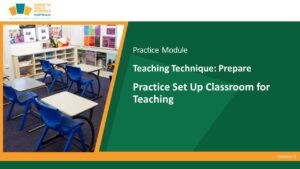 |
Practice Set Up Classroom for TeachingA practice module that goes in-depth for participants to learn what happens when the technique is delivered with fidelity. They learn what happens when the classroom is not set up for teaching with fidelity, the barriers and how to overcome the barriers to set up the classroom for teaching with fidelity. |
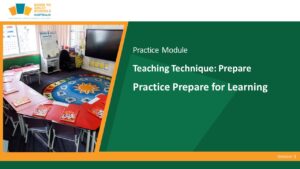 |
Practice Prepare for LearningA practice module that goes in-depth for participants to learn what happens when the technique is delivered with fidelity. They learn what happens when the classroom is not set up for learning with fidelity, the barriers and how to overcome the barriers to set up the classroom for learning with fidelity. |
 |
Practice Teach for the Full PeriodA practice module that goes in-depth for participants to learn what happens when the technique is delivered with fidelity. They learn what happens when teaching for the full timetable period is not delivered with fidelity, the barriers and how to overcome the barriers to deliver teaching for the full timetable period with fidelity. |
 |
Practice Teach the Full Lesson FluentlyA practice module that goes in-depth for participants to learn what happens when the technique is delivered with fidelity. Participants learn what happens when teaching fluently and clearly is not delivered with fidelity, the barriers and how to overcome the barriers to deliver teaching fluently and clearly with fidelity. |
 |
Practice Check for MasteryA practice module that goes in-depth for participants to learn what happens when the technique is delivered with fidelity. Participants learn what happens when teaching to mastery is not delivered with fidelity, the barriers and how to overcome the barriers to deliver teaching to mastery with fidelity. |
 |
Practice Use SignalsA practice module that goes in-depth for participants to learn what happens when the technique is delivered with fidelity. Participants learn what happens when using signals is not delivered with fidelity, the barriers and how to overcome the barriers to deliver using signals with fidelity. |
 |
Practice Teach and Embed Routines and Behaviour StandardsA practice module that goes in-depth for participants to learn what happens when the technique is delivered with fidelity. Participants learn what happens when using routines and expectations is not delivered with fidelity, the barriers and how to overcome the barriers to deliver using routines and expectations with fidelity. |
 |
Practice Provide Positive Praise and AffirmationsA practice module that goes in-depth for participants to learn what happens when the technique is delivered with fidelity. Participants learn what happens when using positive praise and affirmations is not delivered with fidelity, the barriers and how to overcome the barriers to deliver using positive praise and affirmations with fidelity. |
 |
Practice Note Responses to Check for MasteryA practice module that goes in-depth for participants to learn what happens when the technique is delivered with fidelity. Participants learn what happens when noting responses to check for mastery is not delivered with fidelity, the barriers and how to overcome the barriers to deliver noting responses to check for mastery with fidelity. |
 |
Practice Use Positive Motivation StrategiesA practice module that goes in-depth for participants to learn what happens when the technique is delivered with fidelity. Participants learn what happens when positive motivation strategies are not delivered with fidelity, the barriers, and how to overcome them to deliver them with fidelity. |
 |
Practice Complete Lesson in the Standard TimeA practice module that goes in-depth, helping participants learn what happens when lessons are completed within the standard time and delivered with fidelity. Participants learn what happens when lessons are not delivered with fidelity within the standard time, the barriers, and how to overcome them to complete lessons within the standard time with fidelity. |
 |
Practice Use Individual TurnsA practice module that goes in-depth for participants to learn what happens when the technique is delivered with fidelity. Participants learn what happens when using individual turns is not delivered with fidelity, the barriers and how to overcome the barriers to deliver using individual turns with fidelity. |
 |
Practice Engage Students in LearningA practice module that goes in-depth for participants to learn what happens when the technique is delivered with fidelity. Participants learn what happens when using engagement techniques is not delivered with fidelity, the barriers and how to overcome the barriers to deliver using engagement techniques with fidelity. |
 |
Practice Correct ErrorsA practice module that goes in-depth for participants to learn what happens when the technique is delivered with fidelity. Participants learn what happens when using the correction procedure is not delivered with fidelity, the barriers and how to overcome the barriers to deliver using the correction procedure with fidelity. |
|
Practice Address Specific Group ErrorsA practice module that A practice module that examines the benefits and impacts of addressing specific group errors with fidelity. Participants learn what happens when addressing specific group errors is not conducted with fidelity, the barriers that may stand in the way of delivering it well and how to overcome barriers so that addressing specific group errors can be delivered with fidelity. |
 |
Practice Model Student ResponsesA practice module that goes in-depth for participants to learn what happens when the technique is delivered with fidelity. Participants learn what happens when using modelling techniques is not delivered with fidelity, the barriers and how to overcome the barriers to deliver using modelling with fidelity. |
 |
Practice Administer Independent WorkA practice module that goes in-depth for participants to learn what happens when the technique is delivered with fidelity. Participants learn what happens when administering independent work is not delivered with fidelity, the barriers and how to overcome the barriers to administer independent work with fidelity. |
 |
Practice Remediate and RetestA practice module that goes in-depth for participants to learn what happens when the technique is delivered with fidelity. Participants learn what happens when remediating and retesting is not delivered with fidelity, the barriers and how to overcome the barriers to deliver remediating and retesting with fidelity. |
 |
Practice Administer Program AssessmentsA practice module that goes in-depth for participants to learn what happens when the technique is delivered with fidelity. Participants learn what happens when administering program assessments is not delivered with fidelity, the barriers and how to overcome the barriers to administering assessments with fidelity. |
Cycles of School Practice (Cycles 1–8)
 |
Practice Manage School Professional LearningA practice module that examines the benefits and impacts of managing school professional learning with fidelity. Participants learn what happens when school professional learning is not conducted with fidelity, the barriers that may stand in the way and how to overcome them so that professional learning can be delivered consistently and effectively across the school. |
 |
Practice Participate in CoachingA practice module that examines the benefits and impacts of participating in coaching with fidelity. Participants learn what happens when coaching participation is not conducted with fidelity, the barriers that may stand in the way and how to overcome them so that coaching conversations support professional growth and improved teaching practice. |
 |
Practice Pass AssessmentsA practice module that examines the benefits and impacts of passing assessments with fidelity. Participants learn what happens when assessments are not passed with fidelity, the barriers that may stand in the way and how to overcome them so that assessment practices support mastery and consistent progress across the school. |
 |
Practice Conduct CoachingA practice module that examines the benefits and impacts of conducting coaching with fidelity. Participants learn what happens when coaching is not delivered with fidelity, the barriers that may stand in the way and how to overcome them so that coaching supports consistent teaching practices and professional learning across the school. |
 |
Practice Apply Improvement and MasteryA practice module that examines the benefits and impacts of applying improvement and mastery practices with fidelity. Participants learn what happens when improvement practices are not applied consistently, the barriers that may stand in the way and how to overcome them so that mastery and improvement processes strengthen teaching and student outcomes. |
 |
Practice Demonstrate Mastery to Teaching TeamA practice module that examines the benefits and impacts of demonstrating mastery to the teaching team with fidelity. Participants learn what happens when mastery is not demonstrated clearly, the barriers that may stand in the way and how to overcome them so that professional collaboration supports consistent teaching practice. |
 |
Practice Assess School ContextPractice Assess School Context A practice module that examines the benefits and impacts of assessing school context with fidelity. Participants learn what happens when school context is not assessed effectively, the barriers that may stand in the way and how to overcome them so that improvement strategies reflect the needs of the school community. |
 |
Practice Set, Manage and Review School Improvement PlanA practice module that examines the benefits and impacts of setting, managing and reviewing a school improvement plan with fidelity. Participants learn what happens when improvement planning is not conducted effectively, the barriers that may stand in the way and how to overcome them so that school improvement efforts remain focused and sustainable. |
 |
Practice Hold Data ReviewsA practice module that examines the benefits and impacts of holding data reviews with fidelity. Participants learn what happens when data reviews are not conducted effectively, the barriers that may stand in the way and how to overcome them so that teaching teams can use data to guide improvement decisions. |
 |
Practice Implement Improvement PlanPractice Implement Improvement Plan A practice module that examines the benefits and impacts of implementing improvement plans with fidelity. Participants learn what happens when improvement plans are not delivered effectively, the barriers that may stand in the way and how to overcome them so that improvement strategies lead to measurable progress. |
 |
Practice Place Students Correctly in ProgramA practice module that examines the benefits and impacts of placing students correctly in programs with fidelity. Participants learn what happens when placement is not conducted accurately, the barriers that may stand in the way and how to overcome them so that students begin learning at the correct level for success. |
 |
Practice Classroom Data WallA practice module that examines the benefits and impacts of maintaining classroom data walls with fidelity. Participants learn what happens when classroom data is not displayed or reviewed consistently, the barriers that may stand in the way and how to overcome them so that teaching teams can monitor student progress effectively. |
 |
Practice Produce Accurate and Timely DataA practice module that examines the benefits and impacts of producing accurate and timely data with fidelity. Participants learn what happens when data is not collected or recorded effectively, the barriers that may stand in the way and how to overcome them so that data supports decision-making across the school. |
 |
Practice Use Evidence to Discuss Successes and Challenges (incl. with Peer Schools)A practice module that examines the benefits and impacts of using evidence to guide professional conversations. Participants learn what happens when discussions are not evidence-based, the barriers that may stand in the way and how to overcome them so that teams can analyse successes and challenges collaboratively and strengthen teaching practices. |
 |
Practice Apply Evidence-Based Learnings (incl. with Peer Schools)A practice module that examines the benefits and impacts of applying evidence-based learnings with fidelity. Participants learn what happens when learnings are not applied consistently, the barriers that may stand in the way and how to overcome them so that schools strengthen teaching practice and student outcomes through shared expertise. |
 |
Practice Observe DeliveryA practice module that examines the benefits and impacts of observing lesson delivery with fidelity. Participants learn what happens when observation is not conducted effectively, the barriers that may stand in the way and how to overcome them so that classroom practice can be refined through constructive feedback and reflection. |
 |
Practice Hold Weekly Lesson PracticeA practice module that examines the benefits and impacts of holding weekly lesson practice with fidelity. Participants learn what happens when lesson practice is not conducted consistently, the barriers that may stand in the way and how to overcome them so that teachers strengthen fluency in program delivery and instructional techniques. |
 |
Practice Build Positive Expectations with School CommunityA practice module that examines the benefits and impacts of building positive expectations with the school community with fidelity. Participants learn what happens when expectations are not communicated clearly, the barriers that may stand in the way and how to overcome them so that staff, students and families share a common understanding of positive expectations. |
 |
Practice Provide Improvement Updates to School CommunityA practice module that examines the benefits and impacts of providing improvement updates with fidelity. Participants learn what happens when communication about school improvement is inconsistent, the barriers that may stand in the way and how to overcome them so that the school community remains informed and engaged in the improvement journey. |
 |
Practice Set Targets and ActionsA practice module that examines the benefits and impacts of setting targets and actions with fidelity. Participants learn what happens when targets are unclear or not monitored, the barriers that may stand in the way and how to overcome them so that improvement efforts remain focused and measurable. |
 |
Practice Organise Parent and Community InvolvementA practice module that examines the benefits and impacts of organising parent and community involvement with fidelity. Participants learn what happens when engagement is inconsistent, the barriers that may stand in the way and how to overcome them so that families and the wider community contribute positively to student learning. |
 |
Practice Share Term Report Across the School CommunityA practice module that examines the benefits and impacts of sharing term reports with the school community with fidelity. Participants learn what happens when reporting is inconsistent, the barriers that may stand in the way and how to overcome them so that school progress is communicated clearly and transparently. |
 |
Practice Distribute Student Report Cards to ParentsA practice module that examines the benefits and impacts of distributing report cards to parents with fidelity. Participants learn what happens when reporting processes are unclear or delayed, the barriers that may stand in the way and how to overcome them so that parents receive clear and timely information about student progress. |
|
Practice Hold Influencing Conversations with Parents (Coming soon)A practice module that examines the benefits and impacts of holding influencing conversations with parents with fidelity. Participants learn what happens when communication with parents is inconsistent, the barriers that may stand in the way and how to overcome them so that productive partnerships support student learning and wellbeing. |
 |
Practice Schedule Parent Classroom VisitsA practice module that examines the benefits and impacts of scheduling parent classroom visits with fidelity. Participants learn what happens when parent engagement opportunities are limited, the barriers that may stand in the way and how to overcome them so that parents gain a deeper understanding of classroom learning. |
 |
Practice Share Student Data with ParentsA practice module that examines the benefits and impacts of sharing student data with parents with fidelity. Participants learn what happens when student progress is not communicated clearly, the barriers that may stand in the way and how to overcome them so that parents can support learning at home. |
|
Practice Share Strategies and Actions with CommunityA practice module that examines the benefits and impacts of sharing strategies and actions with the school community with fidelity. Participants learn what happens when communication is unclear, the barriers that may stand in the way and how to overcome them so that improvement strategies are understood and supported across the community. Practice Lead Target Setting with Teaching TeamA practice module that examines the benefits and impacts of leading target setting with the teaching team with fidelity. Participants learn what happens when target setting is not collaborative or data-informed, the barriers that may stand in the way and how to overcome them so that teaching teams work toward shared improvement goals. |
Continuous Improvement and Leadership
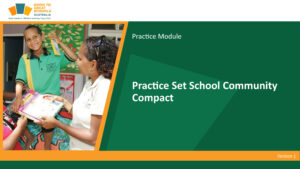 |
Practice Set School Community CompactA practice module that examines the benefits and impacts of establishing a school community compact with fidelity. Participants learn what happens when expectations between the school and community are unclear, the barriers that may stand in the way and how to overcome them so that shared commitments support student learning and school improvement. |
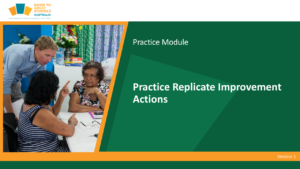 |
Practice Replicate Improvement ActionsA practice module that examines the benefits and impacts of replicating improvement actions with fidelity. Participants learn what happens when successful strategies are not replicated across the school, the barriers that may stand in the way and how to overcome them so that improvement practices can be sustained and scaled effectively. |
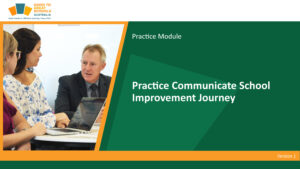 |
Practice Communicate School Improvement JourneyA practice module that examines the benefits and impacts of communicating the school improvement journey with fidelity. Participants learn what happens when improvement efforts are not communicated clearly, the barriers that may stand in the way and how to overcome them so that the school community remains informed and engaged in progress. |
 |
Practice Manage School Attendance StrategyA practice module that examines the benefits and impacts of managing the school attendance strategy with fidelity. Participants learn what happens when attendance strategies are not implemented consistently, the barriers that may stand in the way and how to overcome them so that attendance improves and students are supported to engage in learning. |
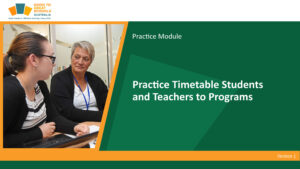 |
Practice Timetable Students and Teachers to ProgramsA practice module that examines the benefits and impacts of timetabling students and teachers to programs with fidelity. Participants learn what happens when timetabling is not conducted effectively, the barriers that may stand in the way and how to overcome them so that programs are delivered efficiently and consistently across the school. |
 |
Practice Prevent Problem BehavioursA practice module that examines the benefits and impacts of preventing problem behaviours with fidelity. Participants learn what happens when preventative strategies are not implemented consistently, the barriers that may stand in the way and how to overcome them so that classrooms maintain positive learning environments. |
 |
Practice Enact Behaviour PlansA practice module that examines the benefits and impacts of enacting behaviour plans with fidelity. Participants learn what happens when behaviour interventions are not implemented consistently, the barriers that may stand in the way and how to overcome them so that students receive structured and supportive behaviour guidance. |
 |
Practice Participate on the PHETA practice module that examines the benefits and impacts of participating in the Positive High-Expectations Team with fidelity. Participants learn what happens when collaboration and decision-making processes are inconsistent, the barriers that may stand in the way and how to overcome them so that the team supports school-wide behaviour improvement. |
 |
Practice Lead a Positive High-Expectations CultureA practice module that examines the benefits and impacts of leading a positive high-expectations culture with fidelity. Participants learn what happens when expectations are not reinforced consistently, the barriers that may stand in the way and how to overcome them so that the school community promotes respectful behaviour and strong learning habits. |
 |
Practice Support Behaviour InterventionsA practice module that examines the benefits and impacts of supporting behaviour interventions with fidelity. Participants learn what happens when interventions are not implemented consistently, the barriers that may stand in the way and how to overcome them so that targeted support improves student behaviour and engagement. |
 |
Practice Teach Rules and RoutinesA practice module that examines the benefits and impacts of teaching rules and routines with fidelity. Participants learn what happens when routines are not taught clearly, the barriers that may stand in the way and how to overcome them so that students understand expectations and participate productively in classroom learning. |
 |
Practice Lead PHE ImplementationA practice module that examines the benefits and impacts of leading Positive High-Expectations implementation with fidelity. Participants learn what happens when practices are not implemented consistently, the barriers that may stand in the way and how to overcome them so that positive expectations are embedded across the school. |
 |
Practice Address Inappropriate BehaviourA practice module that examines the benefits and impacts of addressing inappropriate behaviour with fidelity. Participants learn what happens when responses to behaviour are inconsistent, the barriers that may stand in the way and how to overcome them so that behaviour responses remain fair, clear and supportive of learning. |
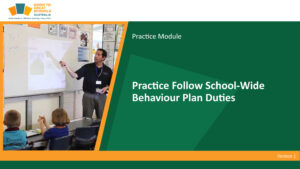 |
Practice Follow School-Wide Behaviour Plan DutiesA practice module that examines the benefits and impacts of following behaviour plan duties with fidelity. Participants learn what happens when responsibilities are unclear or inconsistent, the barriers that may stand in the way and how to overcome them so that staff maintain consistent behaviour expectations across the school. |
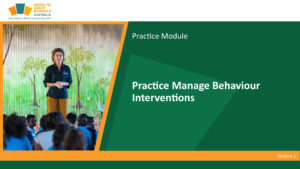 |
Practice Manage Behaviour InterventionsA practice module that examines the benefits and impacts of managing behaviour interventions with fidelity. Participants learn what happens when interventions are not monitored or reviewed consistently, the barriers that may stand in the way and how to overcome them so that behaviour strategies remain effective and responsive to student needs. |
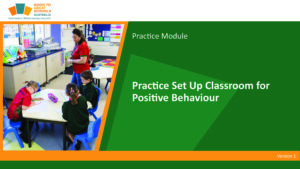 |
Practice Set Up Classroom for Positive BehaviourA practice module that examines the benefits and impacts of setting up classrooms for positive behaviour with fidelity. Participants learn what happens when classroom environments are not structured effectively, the barriers that may stand in the way and how to overcome them so that classroom design supports positive behaviour and learning engagement. |
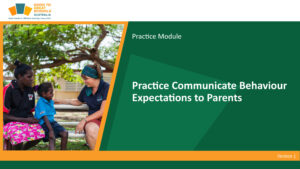 |
Practice Communicate Behaviour Expectations to ParentsA practice module that examines the benefits and impacts of communicating behaviour expectations to parents with fidelity. Participants learn what happens when expectations are not clearly shared with families, the barriers that may stand in the way and how to overcome them so that parents can reinforce positive behaviour at home. |
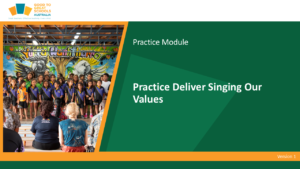 |
Practice Deliver Singing Our ValuesPractice Deliver Singing Our Values A practice module that examines the benefits and impacts of delivering Singing Our Values with fidelity. Participants learn what happens when school values are not reinforced consistently, the barriers that may stand in the way and how to overcome them so that shared values strengthen the school culture and student engagement. |
|
Practice Address Priority ActionsA practice module that examines the benefits and impacts of addressing priority actions with fidelity. Participants learn what happens when improvement priorities are not acted upon consistently, the barriers that may stand in the way and how to overcome them so that school improvement efforts remain focused and effective. Practice Settle School Learning ProgramA practice module that examines the benefits and impacts of settling the school learning program with fidelity. Participants learn what happens when learning programs are not implemented consistently, the barriers that may stand in the way and how to overcome them so that program delivery remains structured and effective across the school. Practice Implement Recruitment and Retention StrategyA practice module that examines the benefits and impacts of implementing recruitment and retention strategies with fidelity. Participants learn what happens when staffing strategies are inconsistent, the barriers that may stand in the way and how to overcome them so that schools maintain a stable and capable workforce. Practice Volunteer Support for After-School ActivitiesA practice module that examines the benefits and impacts of organising volunteer support with fidelity. Participants learn what happens when volunteer engagement is inconsistent, the barriers that may stand in the way and how to overcome them so that after-school programs and student opportunities are strengthened. Practice Develop School-Wide Behaviour PlanA practice module that examines the benefits and impacts of developing a school-wide behaviour plan with fidelity. Participants learn what happens when behaviour expectations are not clearly defined, the barriers that may stand in the way and how to overcome them so that consistent behaviour practices support a positive school culture. |
Special Needs Support
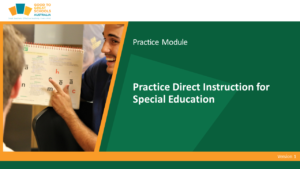 |
Practice Direct Instruction for Special EducationA practice module that goes in-depth for participants to learn what happens when delivering direct instruction in special education settings with fidelity. Participants learn what happens when instruction is not delivered consistently, the barriers that may arise and how to overcome them so that students with additional learning needs receive structured and effective teaching. |
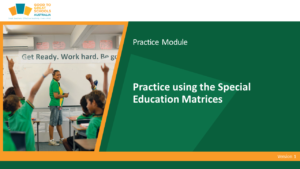 |
Practice Using the Special Education MatricesA practice module that goes in-depth for participants to learn what happens when the Special Education Matrices are used with fidelity. Participants learn what happens when matrices are not applied consistently, the barriers that may stand in the way and how to overcome them so that individualised plans are developed effectively for students with additional learning needs. |
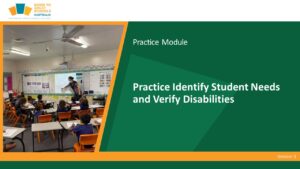 |
Practice Identify Student’s Needs and Verify DisabilitiesA practice module that examines the benefits and impacts of identifying student needs and verifying disabilities with fidelity. Participants learn what happens when identification processes are inconsistent, the barriers that may stand in the way and how to overcome them so that appropriate support and adjustments are provided for students. |
 |
Practice Differentiate Instruction for Students with Identified NeedsA practice module that examines the benefits and impacts of differentiating instruction with fidelity. Participants learn what happens when differentiation is not implemented effectively, the barriers that may stand in the way and how to overcome them so that students with additional learning needs can access curriculum content and succeed in learning. |
 |
Practice Develop and Monitor Individual Student Support PlansA practice module that examines the benefits and impacts of developing and monitoring individual support plans with fidelity. Participants learn what happens when plans are not reviewed or implemented consistently, the barriers that may stand in the way and how to overcome them so that support strategies remain effective for each student. |
 |
Practice Deliver Individual and Group CounsellingPractice Deliver Individual and Group Counselling examines the benefits and impacts of delivering Individual and Group Counselling with fidelity. Participants learn what happens when Individual and Group Counselling is not delivered with fidelity, the barriers that may stand in the way of delivering well and how to overcome barriers so that Individual and Group Counselling can be delivered with fidelity. |
|
Practice Direct Instruction for Maths and English (Coming soon)Practice Lead Special Needs Support (Coming soon)Practice Case Management (Coming soon)Practice Diagnostic Testing (Coming soon)Practice Lead Diagnostic Testing (Coming soon)Practice Write Individualised Plan (Coming soon)Practice Set Up Classroom for Special Needs Support (Coming soon)Practice Use Matrices (Coming soon)Practice Deliver English and Maths using Individualised Plan (Coming soon)Practice Lead Kindergarten Foundational Skills (Coming soon)Practice Support School Counselling (Coming soon)Practice Respond to Major Behaviour Incidents (Coming soon) |
High 5s
 |
Practice Map Case Management Targets for StudentsA practice module that examines the benefits and impacts of mapping case management targets for students with fidelity. Participants learn what happens when mapping case management targets is not conducted with fidelity, the barriers that may stand in the way of delivering it well and how to overcome them so that case management targets can be mapped effectively to support student progress. |
 |
Practice Implement Attendance StrategyA practice module that examines the benefits and impacts of implementing the school attendance strategy with fidelity. Participants learn what happens when the attendance strategy is not delivered with fidelity, the barriers that may stand in the way of delivering it well and how to overcome them so that attendance strategies can be delivered consistently to support improved student attendance. |
 |
Practice Set Weekly Classroom Attendance StrategiesA practice module that examines the benefits and impacts of delivering classroom attendance strategies with fidelity. Participants learn what happens when weekly classroom attendance strategies are not conducted with fidelity, the barriers that may stand in the way of delivering them well and how to overcome them so that attendance strategies support consistent student engagement in learning. |
|
Practice Lead Student Development Team to Review Active Cases (Coming soon)Practice Implement a High 5 Strategy (Coming soon) |
Mini Modules
Based on international teaching experts and their explicit instruction work. They showcase practical strategies about effective teaching. They run from 12 to 20 minutes with pauses so participants can practise the skills.
Closed Place Holder
Anita Archer: Explicit Instruction Strategies in English
 |
This professional development series provides educators with research-informed strategies to inform vocabulary instruction and the teaching of writing in their classrooms. Presented by Anita Archer, each module focuses on practical techniques immediately applicable to increase student engagement, comprehension and skill mastery.
Educators will learn to identify critical vocabulary from texts, adopt evidence-based strategies such as teaching relative words, known synonyms and word pairs. Modules on writing instruction provide structured approaches on how to teach writing genres, frames and ways of motivating students. Participants will also explore techniques for eliciting student responses, giving feedback in real-time and scaffolding student work with compare-and-contrast think sheets. |
John Hollingsworth and Silvia Ybarra: Explicit Direct Instruction Strategies
 |
Well-known researchers and authors of Explicit Direct Instruction (EDI), John Hollingsworth and Silvia Ybarra, have visited Australia a number of times, hosted by Good to Great Schools Australia. With the invaluable contributions of their son Joe Ybarra, their work has impacted classrooms across Australia and armed teachers with proven effective teaching practices that lead to student success. This course assembles their collected wisdom and skill in instruction to tackle the heart of EDI. It does so by shedding light on some of the key principles, strategies and techniques at the core of this powerful approach, provided to educators in detail with the aim of optimising student learning and engagement. |
Broadbeach State School: Direct Instruction Implementation
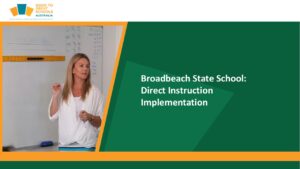 |
This module showcases the experiences of leaders and teachers at Broadbeach State School following their adoption of Direct Instruction. the lessons feature interviews and model classroom sessions that provide insights into the implementation process. Key topics include teacher perspectives on transitioning to Direct Instruction, the impact on student success, and the use of specific classroom routines. Speakers also address common arguments against Direct Instruction by sharing their direct experiences. |